
Organizational Structure
Clear Roles. Strong Collaboration. Shared Success.
Our organizational structure is designed to bring clarity and efficiency across all levels of the company. By defining responsibilities and reporting lines, we ensure smooth communication and effective decision-making. This framework fosters accountability while encouraging teamwork, empowering every member to contribute to our collective vision and long-term goals.
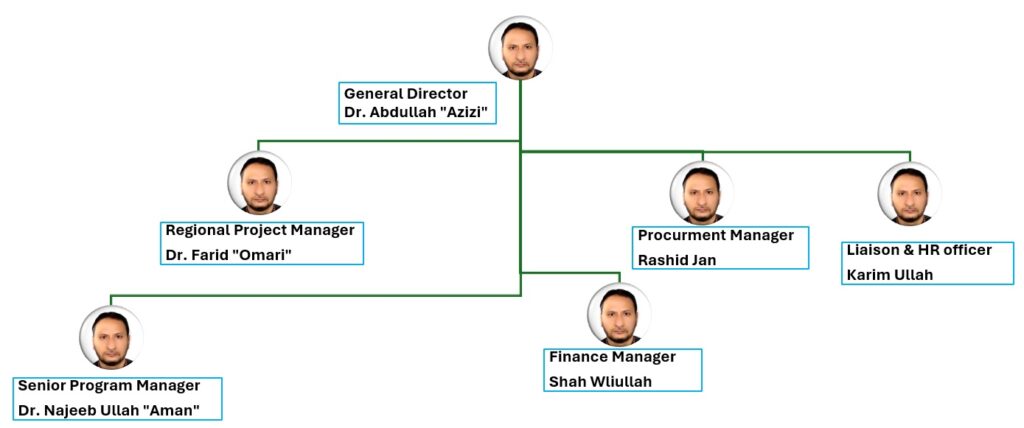
WORLD's Organogram
DEPARTMENTS
WORLD is organized into various departments, each with specific roles and responsibilities that contribute to the overall functioning and mission of the organization. Here’s a detailed explanation of the key departments at WORLD:
1. Plan and Policy Department:
The Plan and Policy Department is a critical part of WORLD’s operations. It is responsible for formulating plans, primarily for fundraising, concept development, and project implementation. This department plays a pivotal role in assessing potential challenges posed by Afghanistan’s unstable political, civil, and conflict-driven environment, particularly in suburban areas. Its goal is to create safe and widely accepted plans for implementing projects and interventions in target regions. The department also leads efforts in transparently and selflessly raising funds to improve the living standards of war-affected populations. Additionally, it establishes connections with government institutions, private entrepreneurs, donors, investors, and grantors. The department is led by the Managing Director and supported by the Chief Executive, Program Managers, and the Board of Directors.
2. Human Resource Department:
The Human Resource (HR) Department is an essential component of WORLD. It manages all employee-related matters, including hiring, suspensions, terminations, problem-solving, leave policies, training, and capacity development. It ensures equal employment opportunities for both genders and administers performance evaluations, tenure-based increments, and bonuses. The department consists of experienced and professionally skilled staff who provide support whenever needed. HR employees are responsible for identifying gaps in HR practices and recommending improvements. The department is led by an HR Manager, supported by a Training Consultant, a Recruitment Officer, and a Liaison Officer.
3. Finance and Administration Department:
The Finance and Administration Department plays a crucial role in internal administration and the proper utilization of WORLD’s funds. It is led by a Finance and Administration Manager, supported by assistants and interns. Key responsibilities include:
Budget Management: Compiling and consolidating accurate organizational and project budgets.
Expenditure Monitoring: Ensuring expenditures align with approved budgets.
Financial Reporting: Preparing monthly, quarterly, and annual financial statements.
Cost Management: Reviewing reports and proposing cost-reduction strategies while maximizing resources.
Policy Compliance: Ensuring policies and procedures comply with donor requirements and state laws.
Daily Operations: Overseeing day-to-day departmental functions.
Cash Flow Management: Managing cash flow and preparing for audits.
This department is vital for maintaining WORLD’s financial health, adhering to regulations, and optimizing resource allocation. It ensures the organization operates efficiently and transparently.
4. Monitoring, Evaluation, and Research Department (ME&R):
The ME&R Department ensures the effectiveness of WORLD’s projects and interventions. Led by an ME&R Manager, it supervises a dedicated team focused on monitoring and evaluating ongoing initiatives to ensure compliance with donor requirements and state laws.
Key responsibilities include:
Quality Reporting: Preparing and submitting high-quality reports to donors.
Knowledge Dissemination: Producing articles, reports, and presentations.
Data Management: Developing and maintaining monitoring systems, often with external software firms.
Data Collection: Supporting field teams and guiding decisions based on collected data.
Support to Data Collectors: Providing technical and managerial assistance to external data collectors and research firms.
Research and Impact Measurement: Designing and analyzing studies to measure project impact.
Performance Monitoring: Implementing monitoring plans, frameworks, and indicators.
5. Media and Communication Department (M&C):
The M&C Department manages WORLD’s communication efforts. It focuses on responsible information sharing, media strategy, and reputation management while adhering to organizational regulations and budget constraints.
Major responsibilities include:
Strategic Advice: Guiding the Managing Director on media and communication needs.
Media Relationships: Building partnerships with key media outlets.
Collaboration: Working with broader communications teams on initiatives.
Strategic Marketing: Advising leadership on marketing project activities.
Strategy Implementation: Executing WORLD’s media and communications strategy in line with organizational goals.
6. Procurement Department:
The Procurement Department goes beyond traditional procurement by streamlining processes and adapting to modern business requirements while maintaining ethical and community-oriented practices. Led by a Procurement Manager, its responsibilities include:
Strategic Procurement: Managing internal procurements within budget.
Business Understanding: Aligning procurement with modern business needs.
Sourcing: Purchasing products and services at the right price, source, and specifications.
Timely Delivery: Ensuring prompt delivery to support operations.
This department plays a pivotal role in optimizing procurement processes to support WORLD’s mission effectively and ethically